.jpg?w=600&h=600)

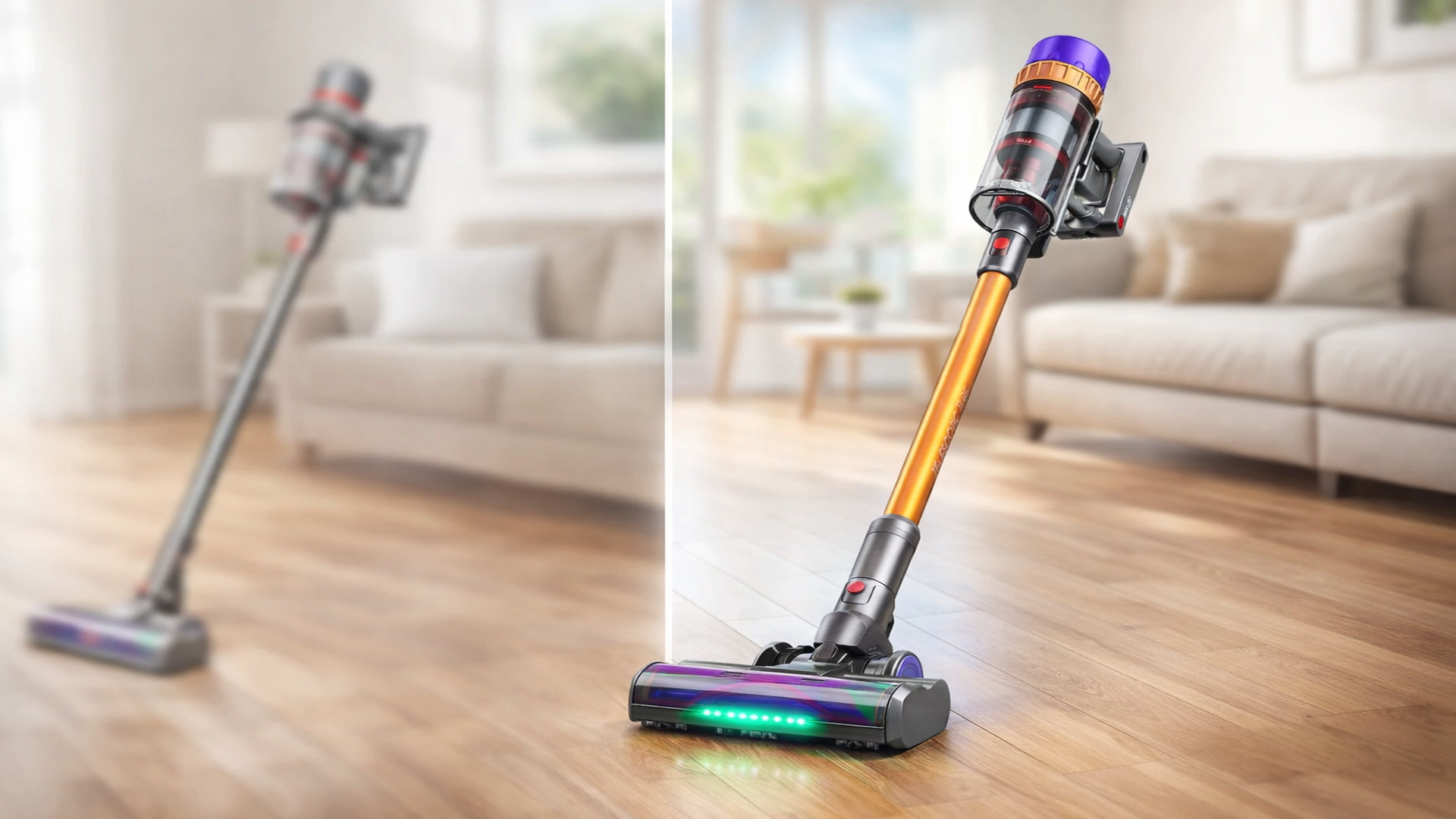
Let’s be honest for a second. If you’d told me two years ago that I would willingly sell my Dyson vacuum cleaner, I would have laughed in your face. Dyson is the name that sits at the top of every “best vacuum cleaner” list. It’s the reputable vacuum cleaner that your friends nod approvingly at when they see it sitting in your closet. It’s the status symbol of home maintenance.
I bought into the hype. Hard.
I spent a small fortune on a top-tier Dyson cordless model, convinced that I was buying the last vacuum I would ever need. And for the first year? It was bliss. The suction was insane, the design looked like something out of a sci-fi movie, and every time I used it, I felt like I had my life together.
But then, the honeymoon phase ended. Slowly, quietly, and expensively.
If you’re currently in the market for a new stick vacuum, or if you’re a fellow Dyson owner who is starting to feel a little bit of “buyer’s remorse,” I want to share my long-term vacuum cleaner experience. Here is exactly why I sold my Dyson and made the switch to an Erabros cordless vacuum—and why it was the best cleaning decision I’ve made in years.
The Cracks in the Armor: Living with Dyson Long-Term
The first red flag came around the 14-month mark. My Dyson’s battery life, which was never stellar to begin with, started to nosedive. I live in a three-bedroom house with mostly hardwood floors and a couple of area rugs. When I first bought the machine, I could just about do the whole house on “Medium” power if I rushed.
But after a year? I was lucky to get ten minutes on “Max” mode. Ten minutes. That isn’t cleaning your house; that is a sprint.
I did what any reasonable owner would do: I looked for a replacement battery. This is where my love affair with the “reputable” brand started to sour. An official Dyson replacement battery was going to cost me nearly $120. That’s almost half the price of a brand-new mid-range vacuum.
Then the trigger broke. Not the main body, mind you, just a small plastic piece on the trigger mechanism. It was a known issue if you scrolled through the forums, but Dyson didn’t offer a simple repair kit for it. The solution? Buy a whole new trigger assembly or send it in for a repair that would take three weeks and cost more than $100.
I started adding it up. I had a $600+ machine that now required $220 in repairs and a new battery just to function like it did on day one. That didn’t sit right with me.
The Straw That Broke the Camel’s Back: Accessory Economics
If you own a Dyson, you know the accessories are great—when they work. But the moment you need to replace a fluffy roller head (the soft one for hard floors) because it’s matted down and won’t spin properly, you’re looking at another $50 to $80. A new crevice tool? $20. A wall mount that doesn’t require drilling into a stud? Good luck.
I realized I was trapped in a premium ecosystem. Every time something broke—and things started breaking regularly—I had to pay a premium tax just to keep using the machine.
As a homeowner, I don’t want to pay a luxury tax on my vacuum. I want a tool that works, that I can maintain without taking out a small loan, and that doesn’t punish me for using it daily.
The Discovery: How I Found Erabros
I started looking for alternatives. I was skeptical of the “cheap” brands on Amazon because I assumed they were disposable junk. But a neighbor of mine had an Erabros cordless vacuum. She raved about it, specifically mentioning the customer service.
I did my research. Erabros isn’t trying to be the flashiest brand in the room. Instead, they seem focused on something that Dyson completely ignored: the user.
I found a deal on the Erabros Cordless Vacuum (the model comparable to my Dyson V-series) and pulled the trigger. I listed my Dyson on Facebook Marketplace the same day.
Here is why, three months into my Erabros experience, I feel like an idiot for not switching sooner.
1. Affordable Accessories (Actual Affordable Accessories)
This is the biggest game-changer for me. With the Erabros, I no longer have a heart attack when an accessory wears out.
I recently ordered a replacement roller brush and a pre-filter kit. The total cost? Under $25. For genuine, brand-specific parts. Not third-party knockoffs that might burn out my motor—actual Erabros parts.
When my dog decided that the soft roller head looked like a chew toy (he’s a menace, we’re working on it), I didn’t panic. I went to their website, clicked a few buttons, and had a new one delivered for less than the cost of a pizza night. With Dyson, I would have been crying into my wallet.
Because the accessories are affordable, I actually replace them when I’m supposed to. I’m no longer running a vacuum with a clogged filter or a worn-out brush just to save money. The result? The machine performs like new consistently.
2. Service That Treats You Like a Human
I had a minor issue two weeks into owning the Erabros. The charging indicator light was flickering in a weird pattern. I assumed I was going to have to go through the typical overseas-manufacturer runaround—long email chains, requests for videos, “we’ll get back to you in 72 hours” nonsense.
Instead, I called their support line.
A person answered. An actual, helpful human. They walked me through a quick reset, confirmed it was a software glitch (not a hardware failure), and then, to my absolute shock, followed up three days later via email to ask if everything was still working fine.
Try getting that from Dyson.
Erabros treats the post-purchase experience like it matters. They understand that a vacuum isn’t just a purchase; it’s a relationship. When you spend $200-$300 on a machine, you want to know the company has your back. Erabros does.
3. Frequent Feature Updates (Yes, Really)
This is the part that feels like I’m living in the future. With my Dyson, what you bought was what you got. If a new model came out six months later with a better bin emptying mechanism or a more ergonomic handle, tough luck.
Erabros seems to be constantly iterating. Because I’m subscribed to their newsletter (something I usually avoid like the plague), I’ve seen them release new upgraded battery packs that are backwards compatible with my model.
Just last month, they released a new anti-tangle brush bar design. I expected to have to buy a whole new vacuum to get that feature. Nope. I just ordered the new brush bar for $19, clicked it onto my existing stick, and suddenly I had the “latest model” features without spending $500.
This iterative, user-focused approach tells me that Erabros is a company that listens. They aren’t just selling a product and moving on; they are building an ecosystem that evolves. When you invest in a Dyson, you’re investing in a brand name. When you invest in Erabros, you’re investing in a machine that gets better over time because you can afford to upgrade the parts that matter.
The Verdict: Why I Made the “Switcheroo”
Look, I’m not here to say Dyson makes bad vacuums. They don’t. They make excellent vacuums. But they make excellent vacuums for people who don’t mind paying a premium for every single aspect of ownership—from the initial purchase to the replacement battery to the filter changes.
After two years of that premium lifestyle, I was exhausted. I was tired of feeling like I owned a high-maintenance pet rather than a cleaning tool.
Switching to Erabros felt like taking a deep breath. The suction is comparable for my needs (hard floors and low-pile rugs). The battery life is actually better than my Dyson ever was, even when it was new. But most importantly, I feel supported.
I no longer dread something breaking because I know I can fix it for under $30. I no longer feel like the manufacturer is trying to squeeze me for every dollar just to keep my floors clean.
If you are currently staring at your expensive cordless vacuum, dreading the day the battery dies or the trigger snaps, I see you. You don’t have to stay trapped in that premium cycle.
My long-term vacuum cleaner experience taught me that a “reputable vacuum cleaner” isn’t just about the brand name stamped on the side. It’s about the total cost of ownership. It’s about service that actually serves you. And it’s about a company that respects your wallet enough to offer affordable accessories and updates.
That’s why I sold my Dyson. And honestly? I should have done it a year sooner.